“Networking is the process of making connections and building relationships. These connections can provide you with advice and contacts, which can help you make informed career decisions” (Columbia University Centre for Career Education).
“Networking is the exchange of information and ideas among people with a common profession or special interest, usually in an informal social setting” (Investopedia).
“Networking a vital skill that comprises personal communication, relationship management and professionalism, as a means of building connections with others to help your career develop. In its early stages, it can involve approaching or reaching out to individuals or organisations that can aid in your professional life” (University of Manchester).
What do you make of those definitions in your experience as a professional? Guess why I prefer the first definition? It is more natural and takes the mystic out of this “networking” which petrifies many, especially those who do not feel comfortable in large groups or with being the centre of attention. Raised heart rate, sweaty palms, trembling, dry mouth, bathroom visits. The experience can therefore be anything pleasant and fruitful.
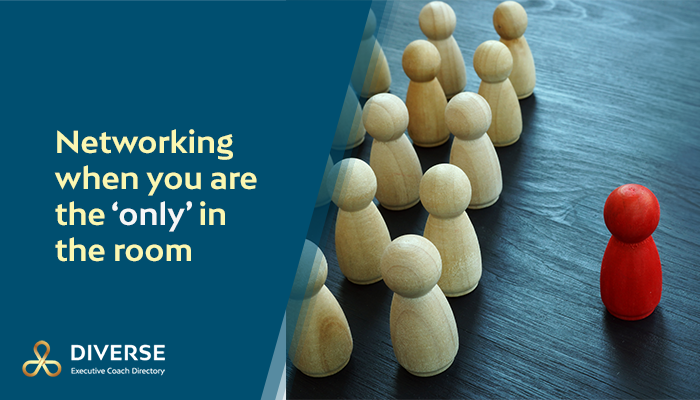
When you are the “only”, in the room these can be amplified. Even an “only” who would usually be energised by being with people, can easily feel hobbled or even paralysed in what should be their natural habitat. Such a person may feel forced to put on a show to convince themselves and others, that they feel fine and can navigate as usual. That does not sound like fun to me and such a forced way of being could not be attractive to be around for long. If this is you, you may wish to step back and change perspective.
So, let us talk a bit about being the “only” in the room. This phrase refers to real or perceived difference from others. When this happens in an already stress-inducing environment, what thoughts could invade the mind in your discomfort? “I’m here only because…” ”I’m fortunate to be allowed in here therefore …” “I must work harder to fit in so that …” “I must/must not … in order to be accepted here. Attention or inattention from others can take on additional meaning which makes matters worse.
Even if we have first-hand experience of bias in similar circumstances, it is possible to combat these powerful mental events we refer to as thoughts, in the present situation. Let us consider some counter-thoughts.
“How do I want to flex in order to understand and be understood” “Exercising my empathy, I wonder who else in this room feels like they don’t fit in and how are they navigating or faking it?” “This seat at the table is mine and I came here for a reason so let me commit to it and not to these feelings of discomfort“. Do the rules you perceive are at play in the setting apply to only you or are they universal, like kindness, politeness, courtesy, consideration for others, respect? If they don’t, then don’t be bound by them. You may need to observe the setting for a while to decipher the environment.
The following may sound controversial; however, it is true and important to consider. As the ‘only’ in the room, you have more in common with others in the room than are different from them. Many in the room may outrightly reject, resist it or may just be unaware of this fact of being human. Everyone in that space is human, have friends and family with challenges and have a life outside work. It is therefore possible to build a bridge with each person in that room but why should you attempt this with someone who is unwilling? Exchanging contacts with many people who will forget you may suit a salesperson who is planting an idea in the minds of all they speak to, for later harvesting. For all others, to be remembered requires a conversation which is a connection that has potential to develop into a mutually beneficial relationship.
Master coach, Rachel told me a decade ago about ‘natural networking’, a concept I now describe as “building professional relationships, naturally”. It starts with having a clear achievable intention when deciding to attend an event. Then, dressed appropriately and comfortably, arrive at the event and survey the room to identify those you with to speak to and others who you feel drawn to speak with. Focus on these people to build those bridges, curious about each of them whilst open to responding to their questions. It is also important to be open to converse with others who are drawn to you but who may not have been on your radar. Your relationship building goes beyond that room at the event to your follow up.
Think of “Presence” as being present with whoever you are with at the event and not how you look, sound or take up space. It is not about wishing for a different reality but embracing the truth of who you are to yourself and to others. There may be only one person you make a connection with and that could be all you need. My measure of successful networking is not the number of people I spoke to, but the feeling of satisfaction about the potential for the connections I made. What is your measure?
If in the end, you make the choice that the event is not meeting your purpose for attending it, then exit gracefully without regrets for having attended and having left it. You undertook an experiment, evaluated it and you chose to end it.
In conclusion, I encourage you to consider the thought that you are the “only” in a few characteristics and the “many” in many more. Therefore, choose what to focus on, at the event and enjoy it from that perspective.
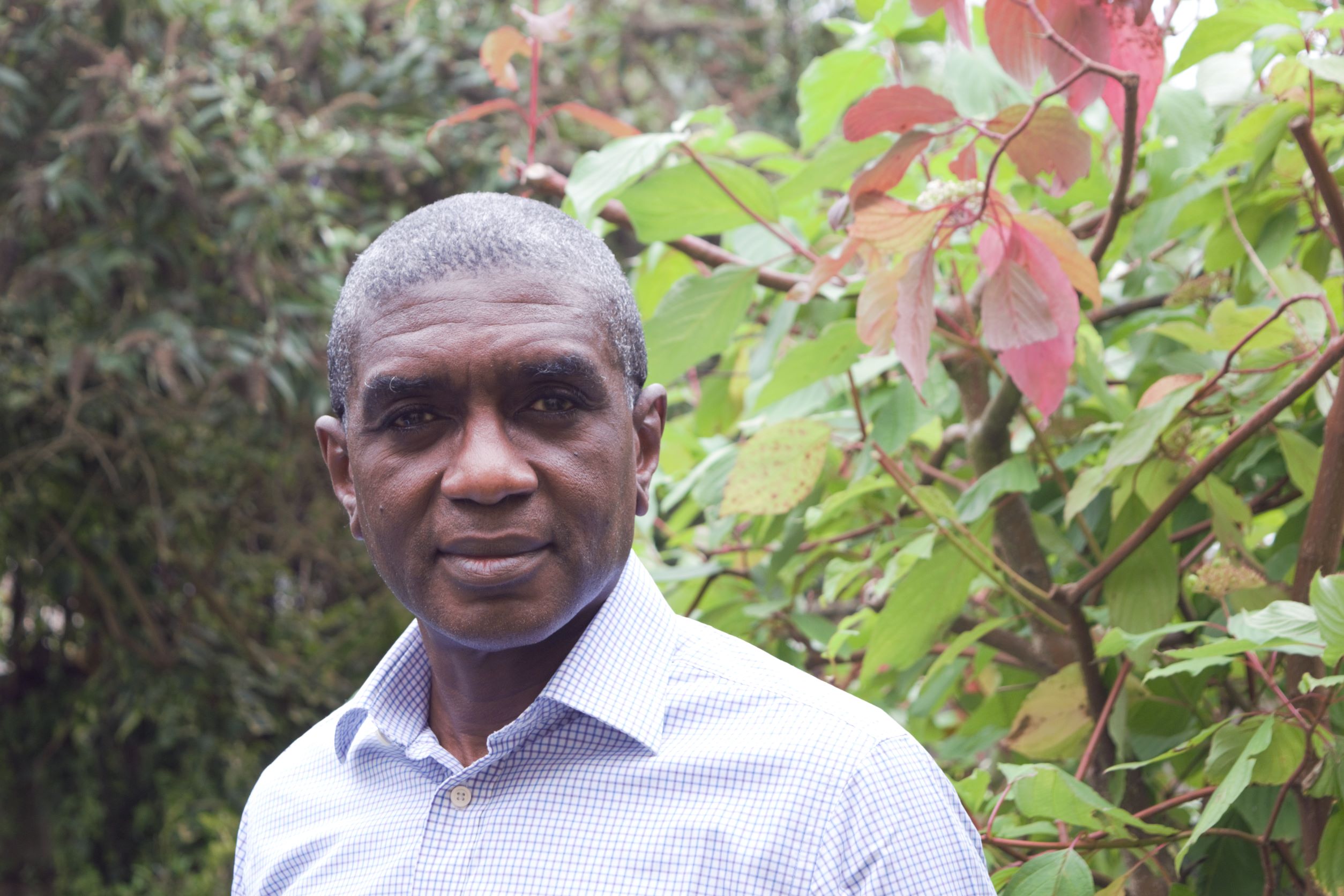
By Joseph Ogbonna
An executive and leadership Professional Certified Coach (PCC) credentialed by the International Coach Federation (ICF), with excellent supporting skills in strategic thinking, accessing inner wisdom, mindfulness, organisational development, project and programme management. Joseph enjoys helping leaders to solve business problems when they pay attention to self-knowledge, learning and drawing on their inner wisdom.

