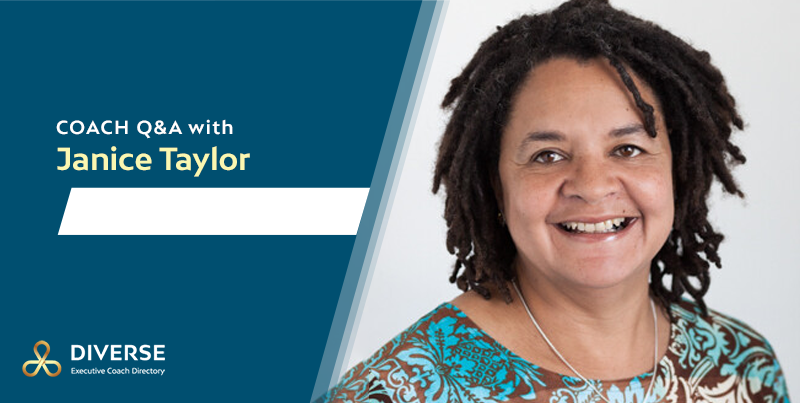
In this fascinating Q&A session, we have the privilege of speaking with renowned executive coach, Janice Taylor. She takes us on a journey back to her humble beginnings, where she reflects on her very first job as a paper round worker at the age of 12. Despite her initial reservations about tramping around the countryside with heavy sacks of papers, Janice credits this experience as the catalyst for her lifelong appreciation of earning her own money. Join us as we delve into Janice’s past and gain valuable insights into her early work ethic and the lessons she learned along the way.
DECD: What was your very first job?
Janice:
My first job was a shared paper round at the age of 12 – I wasn’t so keen to spend my evenings tramping around the countryside with sacksful of papers, but mum insisted. And I am grateful for that because it got me started on earning my own money, which I think was about £3 per week in 1976/77.
At sixteen and about to start my A ‘level course I’d had enough of the paper round and somehow managed to land two jobs – a Saturday job in Clarks Shoe shop. I am forever grateful to the patience of my manager Mr Hyner, it took several weeks of him saying, ‘I know you can do it, Janice,’ for me to hit my sales targets, but once I hit my stride it was amazing. I also had a Sunday job working in a holiday park with Terry and his family. Sometimes I would be serving customers in the shop at others I’d be cooking up fish and chips in the kitchen or out-front clearing tables in the restaurant. Whatever needed doing.
As an undergraduate industrial engineer, I had four paid work placements as part of my degree – we were required to work through the summer. My first placement was in a toothbrush factory in South Wales, my assignment was to recommend ways to improve the flow of materials through production. The second was at Avon Cosmetics, Northampton and I was assigned to find ways to standardise, reduce the different types of packaging they used for the sprays, cosmetics and creams they produced. Both assignments were well received, and I had a great time. My third assignment was more mixed though I was lucky enough to have the opportunity to spend three months working in Bern, Switzerland for a manufacturing organisation. I loved living abroad and would have stayed longer if I could.
My final placement was in a high-speed camera manufacturer in Bovingdon and here my assignment was to identify what steps, processes, training would be needed to automate the buying function within the company. The company had invested in a new computerised system and wanted to move everything across to it. This assignment was also my final year project so there was a lot riding on it.
In 1986 I graduated with a 2:1 degree in Industrial Engineering and a year’s work experience which I used to secure my first full-time paid job at Kessler’s International, a Point-of-Sale manufacturer in East London. They took me on as a graduate engineer and started in their logistics department, again to identify improvements that could be made. As a graduate we were expected to move around the organisation, so I spent some time in Buying, which was not so great. This is where I learnt that not everyone in the workplace has your best interests at heart – this did impact my work and I did not do well at my six-month appraisal. Thankfully, I scraped through and was then moved to Production Control, where I thrived thanks to my new manager, Nick. I learnt so much from him; the way he managed people and ran a complex operation with a few cleverly designed spreadsheets. I remember him with huge affection. He was an amazing manager.
After learning about spreadsheets and we are talking about the days of SuperCalc4 – Excel wasn’t even a twinkle, I was moved to work with John in Estimating. My job was to use spreadsheets to automate the estimating process, so John could stop having to do everything, manually. Given that a lot of the units had upwards of 100 components and dozens of processes this was no mean feat. It was a perfect exchange – John taught me how to prepare estimates, I taught him how to use a spreadsheet. We were a great team and worked so well together we were often referred to as, ‘Johnice.’
After four years at Kessler’s, I left to study for a full-time MSC in Systems Analysis and Design at City University. This didn’t quite work out as I hoped, I scraped a pass on the exams but did well on my dissertation which involved looking at how adults learn best on post-graduate courses, and this was when I realised I wanted to work within the field of adult education.
My next full-time job was at Ford Motor Company – as an Open Learning Co-ordinator, based at Dunton in Essex. In the early 90s Ford had invested in Open Learning centres for each of its main UK sites. Our role as coordinators was to promote the centre to all employees, set up equipment as required and provide guidance and support to the users. Courses and equipment included electrical kits, a collection from Video Arts and 12-inch CDs on Statistical Process Control to name but a few. For its time this project was really forward thinking, and I am still in regular touch with three of the co-ordinators Ford recruited as part of this project. It was a wonderful project and a great team to work with.
But after almost three years there was a change in management within the project and I decided it was time to move on.
While working at Fords I bought my first home and to earn some extra cash I became a Tutor-Counsellor with the Open University on their Living with Technology course. A course designed to introduce people to science and technology. I worked evenings and weekends with my group of sixteen people – delivering biweekly study sessions, marking assignments, and providing feedback, and generally being available as they progressed through the course.
Then I successfully applied to Waltham Forest College as an Open Learning Coordinator – responsible for reviewing the existing service, promoting it within the community, recruiting students to the courses and then matching them with tutors. Further down the line I was involved with opening and managing a learning shop on the high street. I was also at some point involved in a successful bid for European funding – it provided a wonderful opportunity to travel around Europe meeting with our partners.
I have to say it was while working at Waltham Forest College that an Open Learning student decided to write to the Queen to complain about me and the service I was providing. It still makes me smile today and you can read about it here:
But then after five and a half years and unable to take the time I needed to pursue the Career Counselling course at Birkbeck – I decided to leave Waltham Forest and with the support of my husband I set up my business – Blue Sky Career Consulting.
DECD: What inspired you to become a coach?
Janice:
I was already working as a career counsellor after completing my PG Dip in Career Counselling and Consultancy at Birkbeck University when I was asked by the organisation where I was an associate to work with someone who had anger management issues in the workplace.
Initially I was reluctant as I did wonder if I was best qualified to do this work – but after some discussion we agreed I would have an introductory, initial session with him to see how we might work together. I also wanted to be sure he was open to the work. Luckily he was open to the idea, and we worked together for six months as he talked through his frustrations and challenges at work. We also used Myers Briggs Type Indicator tool to help him make sense of his preferences and how they might play out in his interactions with his team.
It is possible that without this work if he had continued with his angry outbursts he might well have lost his job. As it was after our six months of coaching – he rang to tell me he had been promoted and was a lot happier with himself and his team.
After this experience I enrolled on a coaching programme with Noble Manhattan, which gave me a stronger foundation in coaching models and approaches as opposed to counselling.
DECD: As a coach what led you to specialise in the particular area that you concentrate on
Janice:
While at Waltham Forest in Open Learning– I became interested in the stories people told me about their careers. I wanted to understand why they felt Open Learning was their only option to continue with their education/training. I became more and fascinated about their journeys and how they could move forward.
A friend from my days at Fords told me about the two-year course at Birkbeck and after looking into it – I decided to apply and enrol. I was hoping to bring the skills back into my work at the college. Unfortunately, they were unable to grant me the one day a week I needed to attend the course, so with the support of my husband I left the college and set up my business, Blue Sky Career Consulting.
And this is where my network came into its own – my first piece of work under Blue Sky came through another friend and colleague from Ford Motor Company. Because once I’d made the decision to leave – I told everyone I could think of, and this was before I was active on social media.
So, I provided a monthly career counselling service to members of staff at The London School of Economics. With this first piece of work, I felt more confident approaching other organisations.
My fellow students at Birkbeck were another source of networking for me as I met people from many different organisations. This is how I ended up working for the BBC initially as a career counsellor and then as a facilitator on their two-day career development programme. My Birkbeck connections also helped me to get work as a workshop facilitator and career coach at British Airways.
DECD: What is the most interesting part of your work?
Janice:
This has changed over the years, it used to be learning new approaches and tools that I could apply to my career coaching and facilitation work.
It used to be hearing the resilience stories of clients and how people don’t always recognise their potential. I was fascinated by the process of helping individual clients take ownership of their careers and make the most of the choices they have.
Today I find working with small groups incredibly rewarding and satisfying. There is something about creating an environment where people can share and support each other that I find incredibly exciting. Environments where people can learn from each other – something along the lines of peer coaching or Action Learning. Not something I imagined doing when I first started out.
I am also more interested in the broader aspects of work – what it means for people today, how it has changed is it getting better or worse? What the impact of AI will be and how we can best prepare for it as a society.
DECD: What is the one project/case that you’re most proud of in your career and why?
Janice:
Working with the manager I described earlier in the car dealership. We worked together for six months, and it is possible that without this work if he had continued with his angry outbursts he might well have lost his job. As it was after our six months of coaching – he rang to tell me he had been promoted and was a lot happier with himself and his team.
Another assignment I am proud off is developing and delivering a piece of training on Assessment Days for a group of senior managers facing redundancy at their college.
On the day the group was far larger than I was expecting, and they were very angry about the whole process and how it had been handled. None of this was directed at me personally but I was still faced with anger, cynicism, and resignation – there was a whole range of emotions that day.
I am proud of the fact that I made the decision to acknowledge what was happening in the room and then invite them individually to share, what needed to change, what they had enjoyed about working at the college, what they were proud of. It took a long time, but it was time well spent and I was able to deliver the training after we had cleared the air. It was exhausting but very rewarding and I received a lot of positive feedback about how I conducted myself on that day.
If you want to read more – you can do so here:
DECD: What are your thoughts on diversity and inclusion in the workplace in today’s society?
Janice
We may be making some inroads in terms of diversity, but I am not convinced that anywhere near enough is being done in terms of inclusion.
I am not as optimistic as I was in the early part of my career – I had hoped that by now we would be much further along. I wonder if in some instances it is easier to tick the boxes around diversity – whether it be race, disability, gender preferences, sexual orientation etc…. Easier to show and say we have a diverse workforce, but I question, just how included do people feel? How much are they included?
How safe is it for people from the Global Majority to really show up as themselves in the workplace?
And, why do the stats continue to show lower levels of employment, security of tenure, pay, promotion opportunities and leadership attainment for people from the Global majority?
There was also something I came across via LinkedIn about the disproportionate rise in the number of BME workers in insecure work:
https://www.tuc.org.uk/news/number-bme-workers-insecure-work-has-boomed-over-past-decade-tuc-warns
I couldn’t even fully relax into the Barbie movie – on one level it was enjoyable, funny, beautifully choreographed with amazing cinematography.
But though I could see what the filmmakers were trying to do around diversity – the message that we as women are all in this together, did not ring true. We are not and never have been. It has taken me a long time to recognise and accept this.
DECD: What about your heritage makes you feel proud?
Janice:
My feistiness and resilience – that I think comes from my mum and maternal grandmother. I did not fully appreciate how Jamaican I am until I visited it for the first time in my early 50s. It would have been wonderful to have taken mum with us as originally planned.
Both my parents are from Jamaica and came over to the UK in the early 60s to make a better life for themselves.
Now I have visited Jamaica I am proud of my extended family and grateful that with today’s technology it is far easier for us all to stay in touch.
DECD: What do you do outside of work?
Janice:
I love playing the piano and practice every day on my grade three pieces – during the Pandemic this was a big part of my wellness routine.
I love to write, especially stories and I am currently working on a collection of fictional short stories based on my time as an undergraduate engineer at Hatfield during the early 80s. My plan is to complete them next year and then see how I can get them published.
I also have three blogs:
https://careerresilience.wordpress.com/ – all things related to my life as a career coach.
https://pittabread.wordpress.com/ – all things related to my take on life.
https://shortstoriesblogger.com/ – all the stories I have written not related to my time as a student engineer.
Alongside writing I also read as much fiction as I can manage – after years of reading, coaching books, business books etc it is a joy to read works of fiction. I particularly like historical fiction and am a huge fan of the late, Hilary Mantel.
I am also a trustee for the Pearce Foundation – a charity set up by a friend to provide financial and in-kind support to fledgling charities in East Sussex.
In the last five years my husband and I started going to comedy gigs – something we used to do when we were courting. I have always loved comedy and have attended two courses on stand-up which were exhilarating and terrifying at the same time – especially the end of course shows. Despite the terror I might yet sign up for another.
For the future
I want to get back to swimming – something I used to do regularly.
I am also working on an idea for a podcast – because I am fascinated by what is happening in the workplace and how work has changed in my lifetime.
DECD: What’s the most interesting thing you’ve read this week?
Janice:
In recent years I have started reading more than one book at a time – allows me to fit in fiction alongside other things.
So, I have just finished re-reading, Hilary Mantel’s The Mirror, and The Light – the final instalment of her Thomas Cromwell trilogy. I am fascinated by the lead up to his execution by Henry the VIII and whether he had any inkling that this was likely to happen. What happened? Did he take his eye of the ball because he just burnt out?
Another book I am currently re-reading is Utopia for Realists by Rutger Bregman and I particularly like where he cites Karl Marx and Friedrich Engels:
Yet it’s precisely because we’re richer than ever that it is now within our means to take the next step in the history of progress: to give each and every person the security of a basic income. It’s what capitalism ought to have been striving for all along.
And I have just finished reading for the first time, Regina Jackson, and Saira Rao’s book:
Everything You Already Know About Your Own Racism and How to Do Better – White Women.
A hugely powerful, but tough read and I will be re-reading. Think that’s about it.
DECD: What’s the best piece of advice you’ve ever been given?
Janice:
Never give up, Janice – from the factory manager at my first work placement in South Wales. He’d just finished reading my handwritten report on how to improve the flow of materials through the factory. Forty years later I still remember his words and the relief I felt that my project had gone well.
One thing I have learned both personally and professionally – people cannot give you what they don’t have. Keeps me grounded and more forgiving.
DECD: What is your favourite movie, book, song, album or quote?
Janice:
Instead of seeing the rug being pulled from under us, we can learn to dance on the shifting carpet – Thomas F. Crum
It always makes me laugh as I imagine myself hopping and skipping about on my carpet.
Interested in working with Janice? Find out more about her professional coaching career here.

